Philmac Fittings
Leak-Free Connections for Poly Pipe Systems
Philmac Fittings in this catalog for connecting SIDR7 poly pipe without welding or tools.
Superlon Plastics stocks Philmac SIDR compression fittings for polyethylene pipe installations where you need reliable connections without heat fusion equipment. These mechanical fittings work with SIDR7 poly pipe in water distribution, irrigation, and industrial systems where downtime from leaks or joint failures creates operational problems. You install them by hand using the built-in compression mechanism that grips the pipe wall and forms a watertight seal without special tools or training.
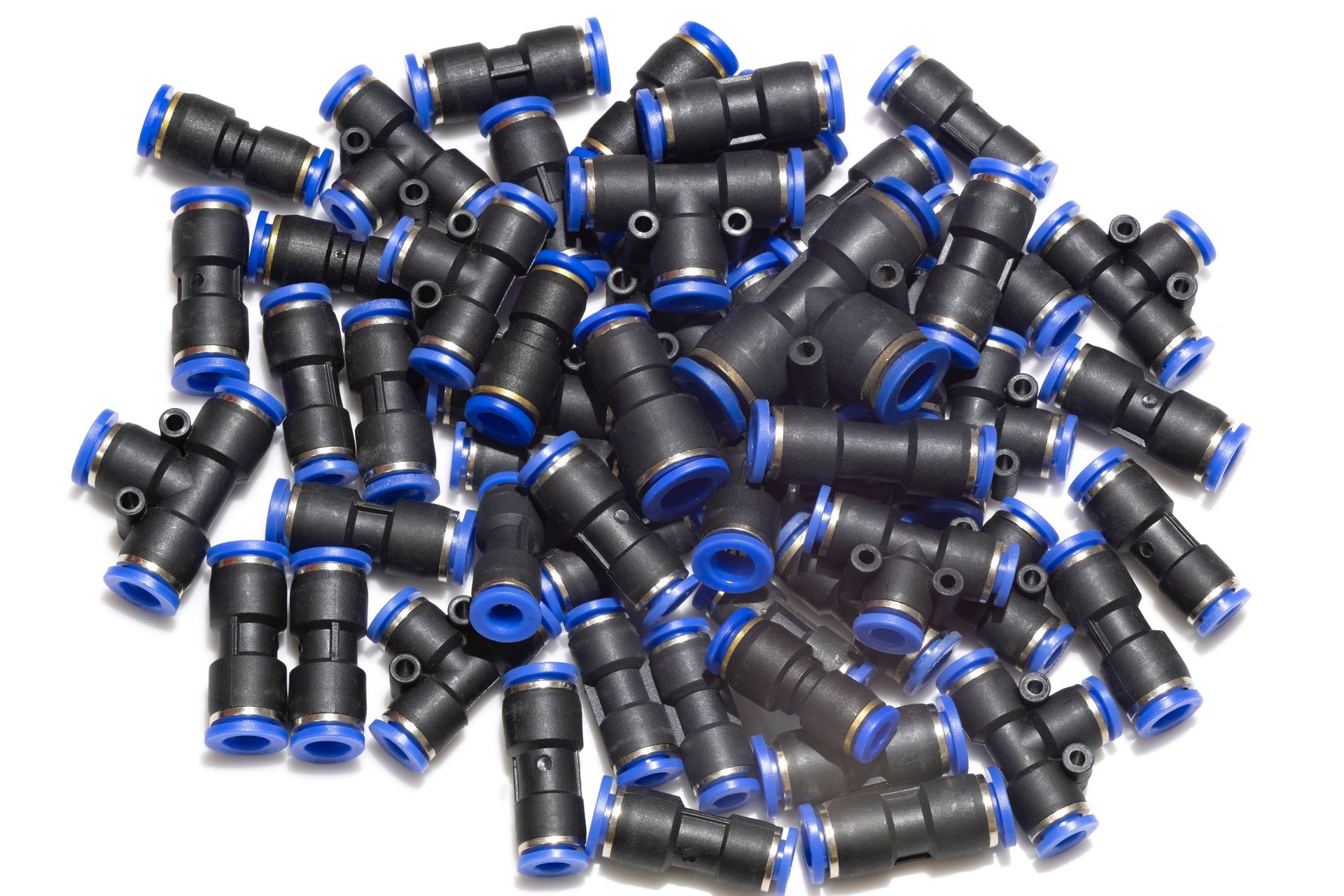
Philmac fittings use a stainless steel grip ring and rubber O-ring system that compresses evenly around the pipe when you tighten the nut. The fittings accommodate thermal expansion and contraction in buried or exposed installations. Each fitting includes a size range marked on the body so you match the correct part number to your pipe diameter. You can disassemble and reuse the fittings during system modifications or repairs without cutting new pipe. The product line includes couplings, elbows, tees, reducers, and adapters with part numbers organized by size and configuration.
Review the product specifications and installation requirements to confirm compatibility with your project.
How the Compression System Works in Field Conditions
You slide the fitting nut and grip ring onto the pipe end, insert the pipe into the fitting body until it reaches the internal stop, then tighten the nut by hand until it stops turning. The grip ring compresses into the pipe wall as the O-ring seats against the outer diameter, forming a mechanical seal that holds working pressure up to the rating marked on the fitting. The system does not require pipe preparation beyond a clean square cut and light chamfer to prevent O-ring damage during insertion.
After installation, you will see the nut seated flush against the fitting body with no gaps or loose threads. The connection remains visible for inspection and does not require burial or insulation to function. You can pressurize the line immediately without curing time or waiting periods. The fitting remains removable if you need to relocate a valve or extend a run without wasting pipe or fittings.
The fittings are rated for cold water and compatible fluids within the temperature range listed in the technical manual. They are not designed for compressed air, steam, or fluids that degrade rubber seals. The grip ring system requires sufficient pipe wall thickness to resist compression damage, which limits use to the SIDR ratios listed in the product specifications. If your pipe has visible gouges, flat spots, or out-of-round distortion, the fitting may not seal correctly.
Common Questions About Product Selection and Use
The questions below address sizing, compatibility, and installation details that affect how these fittings perform in different applications.
What pipe sizes do Philmac SIDR fittings accommodate?
The fittings are available in sizes ranging from small diameter connections up through larger distribution lines, with each fitting marked for a specific SIDR7 poly pipe size. You match the part number to your pipe's outside diameter to ensure the grip ring and O-ring seal correctly.
How do you confirm the fitting is installed correctly?
You tighten the nut by hand until it stops turning and seats against the fitting body with no visible gap. The pipe should sit flush against the internal stop inside the fitting, and you should not be able to pull the pipe free once the nut is tight.
When should you use compression fittings instead of heat fusion?
You use compression fittings when you lack fusion equipment, need to make repairs in wet conditions, or require a connection you can disassemble later without cutting pipe. They work well for temporary installations, system modifications, and locations where welding is impractical.
What materials are included in the fitting assembly?
Each fitting includes a polypropylene body, stainless steel grip ring, rubber O-ring, and plastic compression nut. The components are pre-assembled and remain captured on the fitting body during installation to prevent loss.
Why do some fittings fail to seal after installation?
Sealing problems usually result from pipe that is out of round, cut at an angle, or damaged at the end where the O-ring contacts the surface. You prevent this by making a clean square cut with a pipe cutter and removing burrs or rough edges before inserting the pipe into the fitting.
Superlon Plastics maintains inventory of Philmac fittings in standard sizes with technical documentation available for download. Contact us to confirm stock availability and request product brochures, installation guides, or technical manuals for your specific application.