UV Disinfection System
Wastewater That Meets Disinfection Standards
UV Disinfection System in Tacoma for properties with aerobic treatment units requiring tertiary treatment
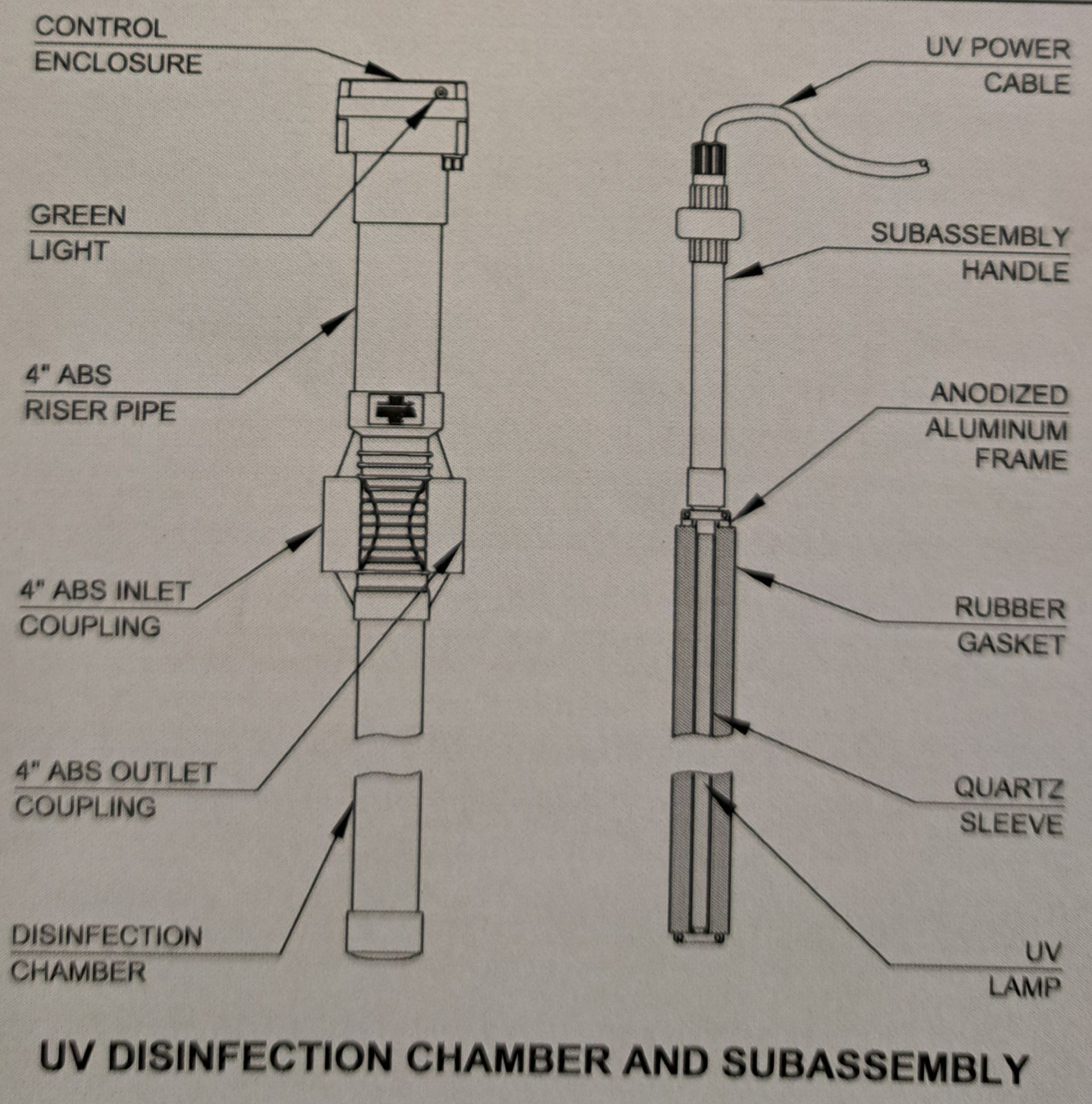
Superlon Plastics supplies the AT-1500 UV disinfection system, a flow-through tertiary disinfection component designed specifically for secondary treated wastewater effluent from residential or small commercial aerobic treatment units. Properties throughout Tacoma using systems like the Norweco Singulair depend on tertiary disinfection to meet discharge standards, and the AT-1500 integrates directly into existing wastewater lines through 4-inch PVC solvent-weld connections. This standalone unit handles both gravity-fed and pumped configurations, making it adaptable to the variety of residential wastewater setups found across Pierce County.
The system functions as the final treatment stage after your aerobic treatment unit completes biological processing, using ultraviolet light to sterilize effluent before discharge or dispersal. The 4-inch inlet and outlet hubs allow the AT-1500 to fit into virtually any residential wastewater line without requiring custom adapters or significant plumbing modifications, which reduces installation complexity for properties already operating aerobic treatment systems.
Request detailed specifications for the AT-1500 to confirm compatibility with your current aerobic treatment unit configuration.
How UV Sterilization Changes Effluent Quality
The AT-1500 operates as a standalone component positioned after secondary treatment, exposing wastewater effluent to ultraviolet light as it flows through the chamber. This exposure disrupts the DNA of bacteria, viruses, and other pathogens present in the effluent, preventing them from reproducing and rendering them inactive. The flow-through design maintains consistent treatment without requiring holding tanks or chemical additives, and the solvent-weld connections create permanent, leak-free joints that maintain system integrity over the life of the installation.
After the AT-1500 completes treatment, you notice effluent that meets tertiary disinfection standards, which is particularly important for properties discharging to surface water or using effluent for subsurface irrigation in areas with strict regulatory requirements. The UV sterilization process leaves no chemical residue and does not alter the pH or mineral content of the effluent, meaning the water characteristics remain stable aside from pathogen reduction. Properties in Tacoma with aerobic treatment units often face permitting requirements that mandate tertiary disinfection, and the AT-1500 addresses this requirement without adding complexity to daily system operation.
The unit requires routine bulb replacement based on manufacturer intervals and periodic inspection to verify that UV intensity remains within effective ranges. The 4-inch connections accommodate standard residential flow rates without creating backpressure that could affect upstream aerobic treatment performance, and the gravity-fed or pumped compatibility means the system works with both conventional drain field setups and pressure-dosed distribution systems.
Questions About UV Disinfection Systems
Properties using aerobic treatment units in Tacoma often need tertiary disinfection to comply with local discharge standards, and understanding how the AT-1500 integrates with existing systems helps clarify installation and maintenance requirements.
- What aerobic treatment units are compatible with the AT-1500? The system works with secondary treated effluent from residential or small commercial aerobic treatment units like the Norweco Singulair, as well as other ATU models that produce effluent suitable for UV disinfection. The 4-inch solvent-weld connections are standard for most residential wastewater systems, allowing integration without custom fittings.
- How does UV disinfection differ from chlorine treatment? UV sterilization disrupts pathogen DNA without introducing chemicals into the effluent, meaning there is no residual disinfectant to neutralize before discharge. Chlorine requires dosing equipment, contact time, and dechlorination steps, while the AT-1500 provides continuous flow-through treatment as effluent passes through the chamber.
- When does the UV bulb need replacement? Bulb replacement intervals depend on manufacturer specifications and cumulative operating hours, typically ranging from one to two years for residential applications. Reduced UV intensity over time decreases disinfection effectiveness, so following the replacement schedule maintains consistent pathogen reduction.
- Why is tertiary disinfection required in Tacoma? Local health departments and environmental agencies often mandate tertiary treatment for properties discharging treated wastewater to surface water or in areas with high water table conditions. The AT-1500 provides a pathway to meet these standards without converting to a municipal sewer connection.
- What installation factors affect system performance? The AT-1500 requires positioning after the aerobic treatment unit but before final discharge or dispersal, and it must remain accessible for bulb replacement and maintenance. Gravity-fed installations need adequate slope to maintain flow through the UV chamber, while pumped systems must deliver effluent at rates within the unit's treatment capacity.
Superlon Plastics provides the AT-1500 as a solution for properties in Tacoma that need reliable tertiary disinfection for aerobic treatment unit effluent. Contact us to confirm system compatibility with your current wastewater setup and receive technical specifications for your installation..